 We all want our homes to look unique. As such, all of us put unimaginable efforts to make it look like heaven. Home furnishings play a major role among all the other interior decor items that we use to embellish our homes.
Fabrics are, in fact, used by interior decorators as a useful accessory that hides any flaw of the house including architectural defects. Apart from this major purpose, home furnishing fabrics are used for providing privacy, insulation from heat and cold as also from noise. The amazing fact about fabrics, when used for home decor, is that they can be reused and recycled very easily. They can be changed without much investment too.
Although fabrics serve many purposes, they have to be chosen carefully as what one kind of fabric can provide, the other can not. Some fabrics absorb heat and light while others do not. Some are naturally resistant to fire and dust whereas some others are given special finishes such as moth resistance and anti bacterial properties. This goes to prove that there is a wide range of fabrics with different properties that can be used as per the requirement of various home furnishings. For example, upholstery fabrics are strong, durable, have resistance to seam slippage and shape retention capability. Similarly, kitchen linen fabrics are stain and flame resistant and curtain fabrics are light resistant. Not only fabrics provide functionality but they can also assist in providing different interior decorating styles based on the fabrics selected. For example, chenille fabric and printed flocked fabric, when used with a creamy white background color, can give a trendy look to any room where as corduroy fabric when used in curtains and cushions can give a contemporary stylish look to the same room. Jacquard and brocade fabric can be used for traditional appearance of any home while knit fabric can give traditional as well as contemporary look depending upon the colors, forms, and textures of the chosen fabric.
Monday, April 13, 2009
Home Decor and Fabrics
Home Decor and Fabrics
We all want our homes to look unique. As such, all of us put unimaginable efforts to make it look like heaven. Home furnishings play a major role among all the other interior decor items that we use to embellish our homes.
Fabrics are, in fact, used by interior decorators as a useful accessory that hides any flaw of the house including architectural defects. Apart from this major purpose, home furnishing fabrics are used for providing privacy, insulation from heat and cold as also from noise. The amazing fact about fabrics, when used for home decor, is that they can be reused and recycled very easily. They can be changed without much investment too.
Although fabrics serve many purposes, they have to be chosen carefully as what one kind of fabric can provide, the other can not. Some fabrics absorb heat and light while others do not. Some are naturally resistant to fire and dust whereas some others are given special finishes such as moth resistance and anti bacterial properties. This goes to prove that there is a wide range of fabrics with different properties that can be used as per the requirement of various home furnishings. For example, upholstery fabrics are strong, durable, have resistance to seam slippage and shape retention capability. Similarly, kitchen linen fabrics are stain and flame resistant and curtain fabrics are light resistant.Not only fabrics provide functionality but they can also assist in providing different interior decorating styles based on the fabrics selected. For example, chenille fabric and printed flocked fabric, when used with a creamy white background color, can give a trendy look to any room where as corduroy fabric when used in curtains and cushions can give a contemporary stylish look to the same room. Jacquard and brocade fabric can be used for traditional appearance of any home while knit fabric can give traditional as well as contemporary look depending upon the colors, forms, and textures of the chosen fabric.
Tuesday, March 17, 2009
Table Linen for Memorable Wedding
 Planning and organizing a memorable wedding party requires a good amount of attention. Table decoration is an integral part of any wedding ceremony. As such, a thoughtful selection of table linen is a must for such an important occasion. However, there are so many fabrics available these days that everyone seems to be puzzled about how to find wedding table linens. I've made an attempt to categorize some of the fabrics that can lend a special feel to your special moment.
The popular fabric choice for wedding table linen is the formal one made of damask, linen, or lace, in neutral colors like white or ivory - plain, monogrammed or embroidered. You can always deter from this formal choice and decide the look you want for your wedding table linen. Pintuck fabric – They can be defined as narrow, sewn rows of fabric. Pintuck fabrics have interesting diamond or square patterns on them. They'll give a little bulge to the table without looking odd. However, choose your glass crockery with wider bases because the tucking on the fabric might make it difficult to balance things on it.
 Bichon fabric - This fabric has a "crushed" or "wrinkly" texture, and thus, sometimes, it is referred to as crushed linens. These fabrics are a little shiny and are made of more delicate fabrics, therefore costs more than some other luxury linens.
 Dupioni- It is also called Shatung Silk. Dupioni has an interesting stubbled texture with a slight sheen. Its unique double weave lets the two colors shine through at the same time. It is crisp to touch and doesn't wrinkle badly. In fact, many bridal gowns and bridesmaids dresses are also made of this royal fabric.
Lamour – They are shiny linen, very soft to touch. Lamour is best when looking for a little shine in your event. Bengaline – It is a poplin-like fabric having a crosswise corded effect. Therefore, it adds texture to the table design. It also has a shiny surface which makes it perfect for special occasions.
 Organza or Chiffon Fabrics: If you want a softer effect, use sheer fabrics like organza or chiffon. Sometimes fitted linen is used on tables. If you want to have an overlay on the top of such regular poly cotton or damask table linen, then also, sheer fabrics are the best choice.
When you've selected the fabric of your choice, just follow some table decorating ideas and make your wedding a memorable event for yourself and your guests.
Table Linen for Memorable Wedding
Planning and organizing a memorable wedding party requires a good amount of attention. Table decoration is an integral part of any wedding ceremony. As such, a thoughtful selection of table linen is a must for such an important occasion. However, there are so many fabrics available these days that everyone seems to be puzzled about how to find wedding table linens. I've made an attempt to categorize some of the fabrics that can lend a special feel to your special moment.
The popular fabric choice for wedding table linen is the formal one made of damask, linen, or lace, in neutral colors like white or ivory - plain, monogrammed or embroidered. You can always deter from this formal choice and decide the look you want for your wedding table linen.Pintuck fabric – They can be defined as narrow, sewn rows of fabric. Pintuck fabrics have interesting diamond or square patterns on them. They'll give a little bulge to the table without looking odd. However, choose your glass crockery with wider bases because the tucking on the fabric might make it difficult to balance things on it.Bichon fabric - This fabric has a "crushed" or "wrinkly" texture, and thus, sometimes, it is referred to as crushed linens. These fabrics are a little shiny and are made of more delicate fabrics, therefore costs more than some other luxury linens.Dupioni- It is also called Shatung Silk. Dupioni has an interesting stubbled texture with a slight sheen. Its unique double weave lets the two colors shine through at the same time. It is crisp to touch and doesn't wrinkle badly. In fact, many bridal gowns and bridesmaids dresses are also made of this royal fabric.
Lamour – They are shiny linen, very soft to touch. Lamour is best when looking for a little shine in your event.Bengaline – It is a poplin-like fabric having a crosswise corded effect. Therefore, it adds texture to the table design. It also has a shiny surface which makes it perfect for special occasions.Organza or Chiffon Fabrics: If you want a softer effect, use sheer fabrics like organza or chiffon. Sometimes fitted linen is used on tables. If you want to have an overlay on the top of such regular poly cotton or damask table linen, then also, sheer fabrics are the best choice.
When you've selected the fabric of your choice, just follow some table decorating ideas and make your wedding a memorable event for yourself and your guests.
Sunday, March 1, 2009
Comfort, Luxury or Eco- Friendly- What's Your Choice for Bath Towels
All of us have used cotton bath towels for a good portion of our lives. However, in this age of specialization, bath towels come in different materials and in a variety of sizes, patterns and colors. You have great options to choose from bath towels that are either comfortable, luxurious or eco-friendly. Some of them even have all the qualities!
Cotton Bath Towels
The natural cotton has a very good texture. It feels good against skin, and is very absorbent that makes it perfect for bath towels. Polyester is sometimes blended with cotton to prevent shrinkage and damage from wear & tear. However, such towels have lower quality than 100% cotton towels. Terry cotton is made by a weaving process that loops the fibers on both sides of the fabric. In the other variety- velour- these loops are cropped to give a smoother texture. However, velour has a tendency to bead water on the fiber which takes longer to dry. Velour towels are appropriate more for decorative purposes while terry cotton towels are for functional use.
Egyptian Cotton Towels: Egyptian cotton is considered to be the finest cotton due to extra long fibers that make it soft and durable towel. However, they are a bit expensive than the terrycloth towels but give the real spa experience.
Organic Cotton Towels: Organic cotton bath towels, although costlier, are usually thicker and more plush. They contain around 700 grams of cotton per sq meter. The regular towels have only 200 to 400 grams of cotton per sq meter. They are environmental-friendly too. Organic Egyptian cotton bath towels are the most luxurious towels. They are extremely fluffy & absorbent, and generally larger than "regular" bath towels.
If you are more conscious towards environment, use bamboo towels. They are softer and dry quickly. Sometimes, they are blended with cotton. The best luxury bamboo bath towels have a nice blend of 65% bamboo & 35% cotton. Bamboo towels provide the best of both worlds- superior softness & absorption of bamboo and durability of cotton!
Microfiber Fabrics Towels
Microfiber Fabric is a synthetic fabric but have extraordinary qualities of absorption and cleaning. Towels made from it are thin, dry quickly, very lightweight and can absorb five times their weight in water. They are specially made for active sports purposes, so you can imagine how comfortable they would be even for daily usage!
Now when you know about all the available bath towels, Choose high quality towels. If you are going for eco-friendly towels, you can always recycle old bath towels!

Comfort, Luxury or Eco- Friendly- What's Your Choice for Bath Towels
All of us have used cotton bath towels for a good portion of our lives. However, in this age of specialization, bath towels come in different materials and in a variety of sizes, patterns and colors. You have great options to choose from bath towels that are either comfortable, luxurious or eco-friendly. Some of them even have all the qualities!
Cotton Bath Towels
The natural cotton has a very good texture. It feels good against skin, and is very absorbent that makes it perfect for bath towels. Polyester is sometimes blended with cotton to prevent shrinkage and damage from wear & tear. However, such towels have lower quality than 100% cotton towels. Terry cotton is made by a weaving process that loops the fibers on both sides of the fabric. In the other variety- velour- these loops are cropped to give a smoother texture. However, velour has a tendency to bead water on the fiber which takes longer to dry. Velour towels are appropriate more for decorative purposes while terry cotton towels are for functional use.
Egyptian Cotton Towels: Egyptian cotton is considered to be the finest cotton due to extra long fibers that make it soft and durable towel. However, they are a bit expensive than the terrycloth towels but give the real spa experience.
Organic Cotton Towels: Organic cotton bath towels, although costlier, are usually thicker and more plush. They contain around 700 grams of cotton per sq meter. The regular towels have only 200 to 400 grams of cotton per sq meter. They are environmental-friendly too. Organic Egyptian cotton bath towels are the most luxurious towels. They are extremely fluffy & absorbent, and generally larger than "regular" bath towels.
If you are more conscious towards environment, use bamboo towels. They are softer and dry quickly. Sometimes, they are blended with cotton. The best luxury bamboo bath towels have a nice blend of 65% bamboo & 35% cotton. Bamboo towels provide the best of both worlds- superior softness & absorption of bamboo and durability of cotton!
Microfiber Fabrics Towels
Microfiber Fabric is a synthetic fabric but have extraordinary qualities of absorption and cleaning. Towels made from it are thin, dry quickly, very lightweight and can absorb five times their weight in water. They are specially made for active sports purposes, so you can imagine how comfortable they would be even for daily usage!
Now when you know about all the available bath towels, Choose high quality towels. If you are going for eco-friendly towels, you can always recycle old bath towels!
Thursday, February 26, 2009
Popular Handmade Carpets

Two types of handmade carpets are particularly popular worldwide. These are the Persian carpets and the Oriental carpets. Persian carpets generally have two parts- the field or the central part and the borders. Geometrical, floral as well as medallion designs are used extensively in these carpets. They are hand knotted carpets which are tied with a single looping knot. The finest carpets may contain more than 50 knots per square cm. An average Persian carpet too has about 30 knots per sq. cm. Apart from the number of knots, the quality of a Persian carpet also depends on the knot density. The higher the knot density, more fine and expensive the carpet will be.
Handmade carpets, when categorized by origin, are known as Persian or Oriental Carpets. However, when studying carpets by weaves, they can be categorized into hand knotted, hand tufted, hand woven, braided and felted carpets. All of them can lend a great personality to our homes.
Popular Handmade Carpets
Two types of handmade carpets are particularly popular worldwide. These are the Persian carpets and the Oriental carpets. Persian carpets generally have two parts- the field or the central part and the borders. Geometrical, floral as well as medallion designs are used extensively in these carpets. They are hand knotted carpets which are tied with a single looping knot. The finest carpets may contain more than 50 knots per square cm. An average Persian carpet too has about 30 knots per sq. cm. Apart from the number of knots, the quality of a Persian carpet also depends on the knot density. The higher the knot density, more fine and expensive the carpet will be.
Handmade carpets, when categorized by origin, are known as Persian or Oriental Carpets. However, when studying carpets by weaves, they can be categorized into hand knotted, hand tufted, hand woven, braided and felted carpets. All of them can lend a great personality to our homes.
Monday, February 23, 2009
How to Care for Textile Furnishings

Fabrics intended to be used for home furnishings are quite expensive and as such they can not be replaced frequently. Select furnishing fabrics according to their intended usage. For example, when buying for sofa in the family room, where it will have maximum usage, fabric should be durable and stain resistant such as nylon, olefin, polyester or rayon. Cotton, too, is durable but is not so much stain resistant. However, the soft feel of cotton and linen provides comfort and they can be used as upholstery in the interior rooms where they'll not be used so often. Here are some other tips for caring and cleaning your upholstery.
Read the Labels: Always read labels to know the manufacturer's care instruction so that you may properly clean the fabrics without damaging them. Usually, all precautions needed for textile care is provided through symbols indicating whether a fabric can be washed, bleached, ironed, dry-cleaned or tumble-dried. Follow the instructions for longer life of your upholstery.
Clean & Care for Home Furnishings: Regular cleaning & caring is essential for all home furnishings.
Vacuum blinds and curtains, including linings, once a week to avoid building up of dirt on them. Use an upholstery attachment for this. When cleaning delicate fabrics, stretch muslin over the nozzle. Get them professionally cleaned every 2-3 years.
Never use a vacuum cleaner to clean feather or down cushions as it will damage the fillings. Don't use soap or detergents on fixed covers as they may cause colors to bleed.
Except when labeled as washable, always dry clean the loose covers. Cotton or linen covers can be hand-washed but don't rub the fabric. Squeeze it gently, and rinse extremely well. Avoid drying in direct sunshine or tumble drying, instead dry flat. Iron covers lengthwise, on a very low heat, while they are still damp.
Keep leather upholstery away from sun, if not possible, protect with curtains and blinds. If scratched, rub it over with a wet cloth to make the scratches less visible. To wipe away spills, moisten the entire surface evenly & lightly and allow drying naturally. Don't apply direct heat.
Steam clean the trimmings, including tassles and fringed trimmings, on soft furnishings. Keep it gentle. Use soft artist's brushes to dust rosettes and ruched braids.
When dry cleaning, always clean the whole set to avoid uneven color change.
Turn the cushion covers regularly for evenly spread color fading. Also change their places as some of the seats are more used than others. This'll ensure even wear & tear. Stashing some cotton terrycloth towels under seat cushions can efficiently deal with unexpected spills.
Don't pull or cut any loose threads. Using a needle or pin, gently push the thread back through to the underside of the fabric.

Spot Cleaning: Use fabric protectors that help in keeping spills from being absorbed into the fibers right away. Anyway, its not enough. Blot any spills immediately with a clean towel. Never rub, only blot gently. Sometimes this is enough to get rid of the stain completely, especially if the fabric has been pre-treated with a fabric protector. If using a fabric cleaner, always test in an inconspicuous area before using. Follow manufacturer's instructions regarding water based or solvent based cleaner. Try to use a mild cleaner. Apply with a soft brush in a circular motion to work into the fibers, then vacuum when dry.
How to Care for Textile Furnishings
Fabrics intended to be used for home furnishings are quite expensive and as such they can not be replaced frequently. Select furnishing fabrics according to their intended usage. For example, when buying for sofa in the family room, where it will have maximum usage, fabric should be durable and stain resistant such as nylon, olefin, polyester or rayon. Cotton, too, is durable but is not so much stain resistant. However, the soft feel of cotton and linen provides comfort and they can be used as upholstery in the interior rooms where they'll not be used so often. Here are some other tips for caring and cleaning your upholstery.
Read the Labels: Always read labels to know the manufacturer's care instruction so that you may properly clean the fabrics without damaging them. Usually, all precautions needed for textile care is provided through symbols indicating whether a fabric can be washed, bleached, ironed, dry-cleaned or tumble-dried. Follow the instructions for longer life of your upholstery.
Clean & Care for Home Furnishings: Regular cleaning & caring is essential for all home furnishings.
Vacuum blinds and curtains, including linings, once a week to avoid building up of dirt on them. Use an upholstery attachment for this. When cleaning delicate fabrics, stretch muslin over the nozzle. Get them professionally cleaned every 2-3 years.
Never use a vacuum cleaner to clean feather or down cushions as it will damage the fillings. Don't use soap or detergents on fixed covers as they may cause colors to bleed.
Except when labeled as washable, always dry clean the loose covers. Cotton or linen covers can be hand-washed but don't rub the fabric. Squeeze it gently, and rinse extremely well. Avoid drying in direct sunshine or tumble drying, instead dry flat. Iron covers lengthwise, on a very low heat, while they are still damp.
Keep leather upholstery away from sun, if not possible, protect with curtains and blinds. If scratched, rub it over with a wet cloth to make the scratches less visible. To wipe away spills, moisten the entire surface evenly & lightly and allow drying naturally. Don't apply direct heat.
Steam clean the trimmings, including tassles and fringed trimmings, on soft furnishings. Keep it gentle. Use soft artist's brushes to dust rosettes and ruched braids.
When dry cleaning, always clean the whole set to avoid uneven color change.
Turn the cushion covers regularly for evenly spread color fading. Also change their places as some of the seats are more used than others. This'll ensure even wear & tear. Stashing some cotton terrycloth towels under seat cushions can efficiently deal with unexpected spills.
Don't pull or cut any loose threads. Using a needle or pin, gently push the thread back through to the underside of the fabric.
Spot Cleaning: Use fabric protectors that help in keeping spills from being absorbed into the fibers right away. Anyway, its not enough. Blot any spills immediately with a clean towel. Never rub, only blot gently. Sometimes this is enough to get rid of the stain completely, especially if the fabric has been pre-treated with a fabric protector. If using a fabric cleaner, always test in an inconspicuous area before using. Follow manufacturer's instructions regarding water based or solvent based cleaner. Try to use a mild cleaner. Apply with a soft brush in a circular motion to work into the fibers, then vacuum when dry.
Thursday, February 12, 2009
Tips on Caring for Carpets and Rugs

Do regular vacuuming: Clean the carpets and rugs regularly and vacuum more often- at least once a week, more frequently in heavy traffic areas. It prevents buildup of gritty debris that can cut up carpet fibers. Use moderate suction and a covered nozzle. Vacuum in the direction of the pile. For older and more fragile rugs, a small hand-held vacuum cleaner is enough. Avoid vulnerable areas like fringes. Regular carpet cleaning without dangerous chemicals is also advisable for their longer life.
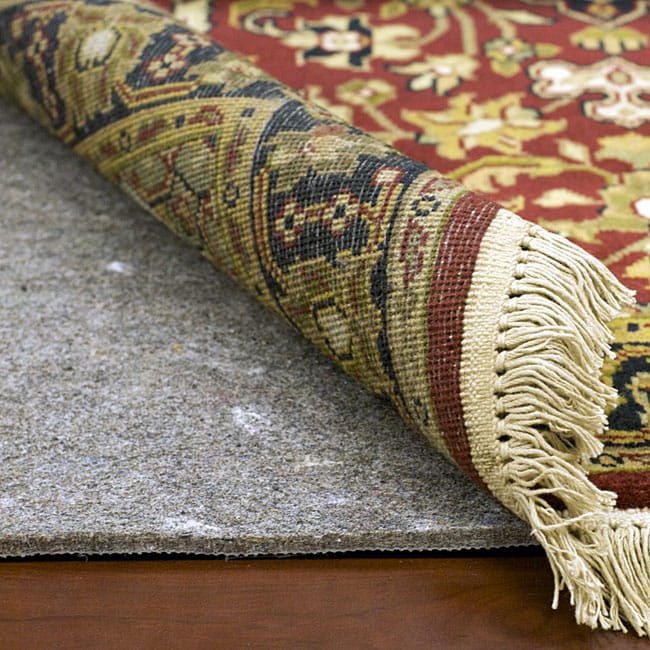
Use rug pad or carpet underlay: A good underlay or underpadding gives protection and prolongs the life of a carpet or rug by allowing them to lie flat and evenly. Underlays must be 1/8 to 1/4" (3 to 6 mm) thick and should be large enough to extend to the edge of the carpet. Avoid underlays having self-adhesives or the ones made of foam, synthetic rubber, vinyl, jute or recycled felt. Check them periodically. If damaged or degraded, replace them.
Reduce Traffic: The best way for this is to avoid walking on them which is almost impossible. So, try to limit the amount of traffic by placing rugs towards one side of the room instead of putting them in front of doorways. Turn over or replace carpets periodically, say in a year or two, so that the damage is evenly distributed. Although carpet protectors, made of plastic strips or heavy woven canvas can protect a carpet from heavy wear, they can be a tripping hazard.
Avoid Indentations: Shoes or heavy furniture can cause permanent indentations in a carpet. Use furniture glides or cups under the legs of heavy furniture. If possible, reposition furniture periodically. Alternatively, move the furniture now and then and dab an ice cube on the spot until the fibers bounce back. Then dry with fan or hair dryer. Remove outdoor shoes before walking on a valued carpet. Stiletto heels are a complete 'no' as they can pierce holes through the carpet. To remove temporary indentations, work the carpet back in place with fingers or with the edge of spoon, dampen the area in question a little, and heat the carpet with a hair dryer.
Handle and Store Carpets Properly: Never fold a carpet. Always roll them up. Don't dump them under the bed, or into an attic or basement. Make the rug or carpet clean and dry before being rolled for storage. Place it face down on the floor. Cover the back with acid-free tissue or pre-washed cotton muslin and then roll from the top of the carpet, in the direction of the pile, onto a wide diameter tube. Cover this carpet tube with Mylar (polyethylene) plastic sheeting or pre-washed, unbleached muslin and then tie lightly in several places with wide cotton ribbons. Always store the carpet off the floor, hung on bracket supports that should touch only the ends of the tube.
Remove Stains Immediately: If a liquid has spilled over it, blot it with tissue paper or soft cloth. Never rub the area. Once the liquid is absorbed, if a special cleaning solution is to be used, first test it on an inconspicuous part of the carpet. If the solution proves to be safe to use, try to use the minimum amount possible. Always work from outside of the stain toward the center to prevent any spreading. Ensure drying up the area with a hair dryer or fan when you are finished.

Tips on Caring for Carpets and Rugs
Do regular vacuuming: Clean the carpets and rugs regularly and vacuum more often- at least once a week, more frequently in heavy traffic areas. It prevents buildup of gritty debris that can cut up carpet fibers. Use moderate suction and a covered nozzle. Vacuum in the direction of the pile. For older and more fragile rugs, a small hand-held vacuum cleaner is enough. Avoid vulnerable areas like fringes. Regular carpet cleaning without dangerous chemicals is also advisable for their longer life.
Use rug pad or carpet underlay: A good underlay or underpadding gives protection and prolongs the life of a carpet or rug by allowing them to lie flat and evenly. Underlays must be 1/8 to 1/4" (3 to 6 mm) thick and should be large enough to extend to the edge of the carpet. Avoid underlays having self-adhesives or the ones made of foam, synthetic rubber, vinyl, jute or recycled felt. Check them periodically. If damaged or degraded, replace them.
Reduce Traffic: The best way for this is to avoid walking on them which is almost impossible. So, try to limit the amount of traffic by placing rugs towards one side of the room instead of putting them in front of doorways. Turn over or replace carpets periodically, say in a year or two, so that the damage is evenly distributed. Although carpet protectors, made of plastic strips or heavy woven canvas can protect a carpet from heavy wear, they can be a tripping hazard.
Avoid Indentations: Shoes or heavy furniture can cause permanent indentations in a carpet. Use furniture glides or cups under the legs of heavy furniture. If possible, reposition furniture periodically. Alternatively, move the furniture now and then and dab an ice cube on the spot until the fibers bounce back. Then dry with fan or hair dryer. Remove outdoor shoes before walking on a valued carpet. Stiletto heels are a complete 'no' as they can pierce holes through the carpet. To remove temporary indentations, work the carpet back in place with fingers or with the edge of spoon, dampen the area in question a little, and heat the carpet with a hair dryer.
Handle and Store Carpets Properly: Never fold a carpet. Always roll them up. Don't dump them under the bed, or into an attic or basement. Make the rug or carpet clean and dry before being rolled for storage. Place it face down on the floor. Cover the back with acid-free tissue or pre-washed cotton muslin and then roll from the top of the carpet, in the direction of the pile, onto a wide diameter tube. Cover this carpet tube with Mylar (polyethylene) plastic sheeting or pre-washed, unbleached muslin and then tie lightly in several places with wide cotton ribbons. Always store the carpet off the floor, hung on bracket supports that should touch only the ends of the tube.
Remove Stains Immediately: If a liquid has spilled over it, blot it with tissue paper or soft cloth. Never rub the area. Once the liquid is absorbed, if a special cleaning solution is to be used, first test it on an inconspicuous part of the carpet. If the solution proves to be safe to use, try to use the minimum amount possible. Always work from outside of the stain toward the center to prevent any spreading. Ensure drying up the area with a hair dryer or fan when you are finished.
Tuesday, February 10, 2009
Mattress for a Good Night's Sleep- How They are Made

A good quality mattress is very essential, not only for sound sleep but also to be fit. When a mattress is made with utmost care, it is neither too hard nor too soft. It has the right mix of comfort and flexibility to support our spinal curve. A mattress can be said to be a quality product only when it keeps our back in a natural position thus avoiding any kind of health hazard. Mattress manufacturers have to be very vigilant while making mattresses. Let's see how it is made?
The most prevalent mattresses, today, are basically of two types- innerspring and boxspring. The main components for innerspring mattresses are wires that are used to make springs and a semi-rigid netting or wire mesh called insulator. Apart from insulator, there are cushioning layers that can be made of any material such as natural fiber, polyurethane foam, or polyester. Then there are flanges made of fabric, and the hogs rings of metal. Top, bottom, and side panels of a mattress is made of a durable fabric cover quilted over a backing of foam or fiber. The binding tape that holds the outer mattress cover together is made of heavy-duty, fibrous, synthetic material.
The insulator and the cushioning layers are affixed to the innerspring unit- a series of wire coils. The insulator is fitted directly onto the innerspring and prevents the next layer i.e. the cushioning, from molding to the coils. The cushioning layers can differ in number from mattress to mattress, ranging from 2 to 8 layers and from 1/4 inch to 2 inches in thickness. The fabric flanges are the connecting panels that are attached to the quilted mattress cover with large, round staples called hogsrings. The top, bottom, and side panels of the mattress are stitched together with border tape.

Some manufacturers also make foundation mattresses or boxsprings that lie directly beneath the mattress, resting on the frame of the bed. Some of them have spiked coil configuration where springs or torsion bars are used for giving support. In others, springs are not used and they are made of wooden frame only. Boxsprings having spiked coil design are most commonly available. The boxspring can be upholstered. Even if no upholstery is used then also it always gets a fabric covering.
If we follow certain mattress guidelines, then we'll surely get our due sleep comfort.
Mattress for a Good Night's Sleep- How They are Made
A good quality mattress is very essential, not only for sound sleep but also to be fit. When a mattress is made with utmost care, it is neither too hard nor too soft. It has the right mix of comfort and flexibility to support our spinal curve. A mattress can be said to be a quality product only when it keeps our back in a natural position thus avoiding any kind of health hazard. Mattress manufacturers have to be very vigilant while making mattresses. Let's see how it is made?
The most prevalent mattresses, today, are basically of two types- innerspring and boxspring. The main components for innerspring mattresses are wires that are used to make springs and a semi-rigid netting or wire mesh called insulator. Apart from insulator, there are cushioning layers that can be made of any material such as natural fiber, polyurethane foam, or polyester. Then there are flanges made of fabric, and the hogs rings of metal. Top, bottom, and side panels of a mattress is made of a durable fabric cover quilted over a backing of foam or fiber. The binding tape that holds the outer mattress cover together is made of heavy-duty, fibrous, synthetic material.
The insulator and the cushioning layers are affixed to the innerspring unit- a series of wire coils. The insulator is fitted directly onto the innerspring and prevents the next layer i.e. the cushioning, from molding to the coils. The cushioning layers can differ in number from mattress to mattress, ranging from 2 to 8 layers and from 1/4 inch to 2 inches in thickness. The fabric flanges are the connecting panels that are attached to the quilted mattress cover with large, round staples called hogsrings. The top, bottom, and side panels of the mattress are stitched together with border tape.
Some manufacturers also make foundation mattresses or boxsprings that lie directly beneath the mattress, resting on the frame of the bed. Some of them have spiked coil configuration where springs or torsion bars are used for giving support. In others, springs are not used and they are made of wooden frame only. Boxsprings having spiked coil design are most commonly available. The boxspring can be upholstered. Even if no upholstery is used then also it always gets a fabric covering.
If we follow certain mattress guidelines, then we'll surely get our due sleep comfort.
Monday, January 19, 2009
How to Select Window Treatments
Windows are indispensable parts of a house. If selected thoughtfully, they add character to any room. Before buying Window Treatments, one has to consider at least four aspects- Privacy, Light Control, Heat & Sound Insulation
Cellular Fabric Shades: Made of honeycomb fabric, cellular shades give privacy, sound & heat insulation as well as light filtration. Single-cell shades are good for small and medium-size windows and double-cell shades for larger ones. Darker colors cut sun glare more efficiently than lighter ones and fade-proof colors block nearly 100% UV rays.

Roller Shades: For privacy and light control, roller shades made of vinyl or fabric are a good option. Fabric used for making these shades include both light filtering and room darkening materials. They come in standard version or with a reverse roll where the fabric hides the roll of the shade, or with a cassette headrail system. You can customize them with a variety of trims, hems, and decorative pulls.
Blinds: Mainly for heat insulation and protection from sunlight, Blinds come in horizontal and vertical versions. They provide nearly private environment
Drapes and Curtains: The timeless window solutions made of fabric can be used for any purpose just by choosing right ty
All of the above window treatments can well be used for rendering style to your rooms. Just select the patterns according to the mood you want for the room- casual, romantic or formal. A good amount of fabric flowing from floor-to-ceiling gives a formal look. Swags made of sheer fabric draped across wide window rings lend contemporary elegance and a simple frame covered in a colorful cotton fabric can be great for casual look. You can even take expert opinion for right selection of window treatments.
How to Select Window Treatments
Windows are indispensable parts of a house. If selected thoughtfully, they add character to any room. Before buying Window Treatments, one has to consider at least four aspects- Privacy, Light Control, Heat & Sound Insulation
Cellular Fabric Shades: Made of honeycomb fabric, cellular shades give privacy, sound & heat insulation as well as light filtration. Single-cell shades are good for small and medium-size windows and double-cell shades for larger ones. Darker colors cut sun glare more efficiently than lighter ones and fade-proof colors block nearly 100% UV rays.
Roller Shades: For privacy and light control, roller shades made of vinyl or fabric are a good option. Fabric used for making these shades include both light filtering and room darkening materials. They come in standard version or with a reverse roll where the fabric hides the roll of the shade, or with a cassette headrail system. You can customize them with a variety of trims, hems, and decorative pulls.
Blinds: Mainly for heat insulation and protection from sunlight, Blinds come in horizontal and vertical versions. They provide nearly private environment
Drapes and Curtains: The timeless window solutions made of fabric can be used for any purpose just by choosing right ty
All of the above window treatments can well be used for rendering style to your rooms. Just select the patterns according to the mood you want for the room- casual, romantic or formal. A good amount of fabric flowing from floor-to-ceiling gives a formal look. Swags made of sheer fabric draped across wide window rings lend contemporary elegance and a simple frame covered in a colorful cotton fabric can be great for casual look. You can even take expert opinion for right selection of window treatments.
Popular Posts
-
 Hot Fashion Trends Fashion Shoes and Bags 2012 If there is a trend that seems to have cornered the most prestigious collections of handbags ...
 -
 Nail Fashion Trends Fashion Color For Nail 2012 If there is something for which women have weakness, is by the nails, because we like to be ...
 -
 Let your imagination run wild and explore some of the hottest hairstyles of the new season. Transform yourself into a true hair icon by bein...
 -
 SELLER: Oksana Baiul LOCATION: Cliffside Park, NJ PRICE: $799,000 SIZE: 2 bedrooms, 1.5 bathrooms YOUR MAMAS NOTES: One day last week, while...
 -
 Sarongs are the ultimate piece of beach clothing for women. Not only do they work as elegant cover ups but also can also be used as towel or...
 -
 SELLER: Denise Rich LOCATION: New York City, NY PRICE: $65,000,000 SIZE: 12,000 square feet (approx.), 7 bedrooms, 9 full and 2 half bathroo...
 -
 Hot New Fashion Trends Fashion Fall Winter 2012 2013 From the hand of one of the largest specialists have as a model of fashion , Trendshop...
 -
images Transformers: Dark of the Moon Shockwave in Transformers: pdakwala 02-28 11:01 AM Hello everyone, There is conference call on Thur...
-
 NAME: Joey Travolta SIBLING: John Travolta CAREER: Actor ( Dumb Luck In Vegas , Hollywood Vice Squad , 3 Ninjas Kick Back , Beach Babes ...


